
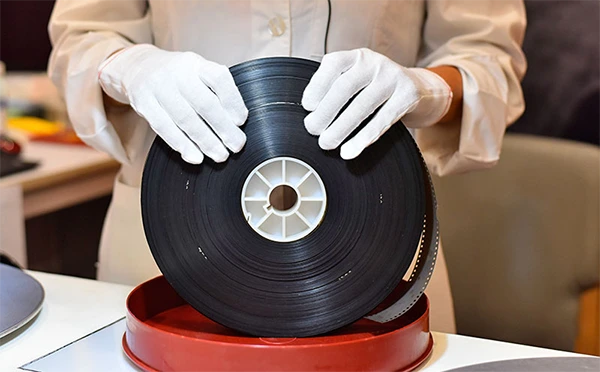
The terms “film preservation” and “film restoration” are usually used interchangeably in public, but in reality, they actually describe two totally different disciplines within the archival sciences.
For institutions and professionals responsible for maintaining motion picture collections, understanding the difference is crucial, as it has direct implications for how resources are used, which technologies are deployed, and what a film collection appears like.
This article outlines that distinction and shows why knowing that distinction is important for everyone in global institutions.
Key Takeaways
- Film preservation includes many practices: controlling the environmental conditions in which the film is stored, selecting appropriate archival storage, and handling materials
- Restoration work can involve physical repairs to damaged film, the combination of complete sequences from surviving fragments, and color grading to address fading
- Preservation and restoration are not competing approaches. In practice, they are sequential and mutually dependent
- Both preservation and restoration operate under conditions of material urgency
Film preservation, at its core, is a preventive discipline. Its main objective is to slow or halt the natural deterioration of film materials so that they remain in their current state for as long as possible.
This includes a range of practices: controlling the environmental conditions in which the film is stored, selecting appropriate archival storage, handling materials in ways that reduce physical stress, and monitoring collections for early signs of degradation.
The most fundamental tool in a preservationist’s inventory is not technology but environment. Temperature, relative humidity, and atmospheric consistency are the main variables that decide how long a film element remains viable.
Film stock is a chemically active material. Cellulose nitrate, the base used in professional cinema from the 1880s through the early 1950s, is highly flammable and prone to release corrosive gases as it degrades with time.
Cellulose acetate, which replaced the earlier compound as the industry standard from the mid-1920s onwards, and remained dominant throughout the 20th century, is susceptible to a well-documented decomposition process known as vinegar syndrome, in which the base releases acetic acid, causing shrinkage, warping, and eventual emulsion loss.
Even the more chemically stable polyester-made films that began replacing acetate in the 1970s and 1980s are not immune to degradation under bad storage conditions.
Preservation does not reverse damage that has already occurred. It attempts to reduce damage that might occur. A preserved film may still carry scratches, color shifts, or minor physical imperfections accumulated over time. The preservationist’s mandate is not to correct these but to prevent their conditions from getting worse.
Film restoration is an active and often highly technical process. It involves identifying existing film elements, assessing what the film looked like at a defined reference point, and using available tools to bring surviving materials as close to that state as possible.
Restoration work can involve physical repairs to damaged film, the combination of complete sequences from many surviving fragments, color grading to address fade, removal of dust, and splice marks using digital tools.
In cases where the original camera negatives have been lost, restoration work may work from release prints, or even prints obtained from multiple countries, to reconstruct a picture as best as possible.
The restoration process universally involves scanning the original film elements at high resolution, creating a digital intermediate on which correction and reconstruction work can be performed effectively.
Modern scanning tech can capture film at resolutions exceeding 4K and in some cases even 8K, preserving the full structure and tonal range of the original image.
The output of this process is typically a Digital Cinema Package (DCP) for theatrical exhibition, a streaming master, and, in some cases, a new film print output to 35mm for institutions dedicated to photochemical projection.
Crucially, restoration decisions involve interpretation. When an original negative stops existing, or when its surviving elements differ from one another, restorers must make decisive decisions about which version of a film to treat as authoritative.
These judgements are informed by historical research, technical analysis, and consultation with filmmaker or their estates wherever possible, but they stay, to some degree, acts of editorial choice.
Fun Fact
According to the National Archives, the Library of Congress manages a staggering vault of 150,000 nitrate film reels.
Preservation and restoration are not competing approaches. In practice, they are sequential and mutually dependent.
A film cannot be meaningfully restored if it has not first been preserved well enough to survive in a form worth restoring. And restoration, once complete, creates new materials — including digital masters, new film prints, and cataloged elements — that must themselves be preserved. The output of a restoration project is the input for a new preservation challenge.
Organizations working at the intersection of both disciplines usually combine physical storage with active digitization and media services.
This means maintaining climate-controlled vault-like environments for original film elements while also managing digital assets, data migration schedules, and access copies for distribution.
Companies, such as Pro-tek Vaults, offering archival film storage and media preservation services operate at precisely this intersection, providing the controlled physical environments that preservation requires alongside the scanning and digital infrastructure that modern restoration workflows depend on.
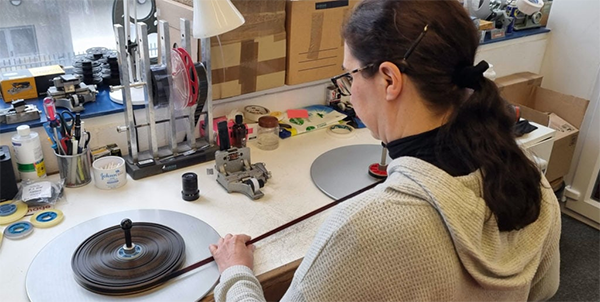
For museums, studios, broadcasters, and educational institutions managing film collections, the practical implication of understanding this distinction is significant. Preservation is an ongoing operational commitment.
It also requires consistent environmental management, regular inspection, and long-term planning. Restoration is typically a project-based activity, started by a commercial opportunity, an academic initiative, or the recognition that a specific film’s condition has worsened to a point where intervention is urgently required.
Institutions that combine the two often underfund preservation with the assumption that restoration can compensate for poor storage. The evidence does not support this. A film element that has been allowed to deteriorate considerably is very difficult, expensive, and in some cases impossible to restore.
Vinegar syndrome in its advanced stages, extensive mold growth, and nitrate decomposition beyond a certain threshold represent conditions from which no restoration process can recover original image data that has already been chemically destroyed.
A 2013 Library of Congress report — the first comprehensive survey of its kind — found that approximately 70% of all feature-length silent films produced in America have been lost, in most cases due to neglect and the destruction of prints rather than deliberate archival failure.
The lesson from that historical record is that preservation is not a preliminary step to be completed before the real work of restoration begins. It is the real work, sustained over the entire life of a collection.
Both preservation and restoration operate under conditions of material urgency. Film degrades continuously, and the window for intervention narrows with each passing decade.
Acetate collections processed in the mid-20th century are now well into the period where vinegar syndrome is an active risk. Color films from the same era face dye fading that cannot be undone once the dye layers have broken down.
The distinction between preservation and restoration ultimately reflects two different relationships with time. Preservation is a discipline that works against time, slowing the processes of deterioration.
Restoration is a discipline that works with whatever time has left, reconstructing as complete a record as possible from surviving evidence. Both are essential. Neither is sufficient without the other.
