
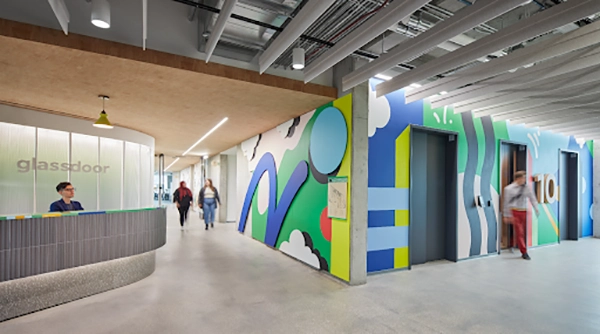
Have you ever walked across the environmental summits and wondered what the walls are trying to depict? Well, if the answer is yes, it is the environmental branding, and this is what this article is about.
According to Marketing LTB,78% consumers have switched brands based on the environmental impact.
Therefore, this article aims to discuss environmental branding systems and how they showcase the modular footprints, understand visual communication, and more!
Key Takeaways
- Brand core definition before space design
- Modular footprint strategy and layout logic
- Visual communication within physical boundaries
- Interaction Architecture Inside modular systems
- Material Selection and Build Inconsistency
- Measurement and brand impact evaluation
The brand essence has to be determined in concrete terms before drawing a plan or selecting the materials.
The key questions that come up are:
In my experience of working with exhibition teams, this is the step that should not be skipped, as it leads to expensive re-design.
A booth is a physical setting of positioning. In case a brand states efficiency, the layout should show clarity and speed.
In case it leads to innovation, materials and media must show that promise, not only say it.
The research by trade show conducted by CEIR (Center for Exhibition Industry Research) indicates that 81 percent of people who attend trade shows possess buying power.
That implies that messaging is to be accurate. A strategy-less modular system is visual noise. Define the core first. Design follows.
Modular showcase systems operate within fixed dimensions. Whether designing linear booths or 20×20 trade show booths, the footprint defines traffic flow, Customer engagement, etc.
This makes it a vital criterion of consideration.
Whereas, the common mistake is: Filling space instead of structuring it.
Layout logic should answer three questions:
Without this sequence, branding becomes fragmented. With it, even standardized modular units feel intentional and refined.
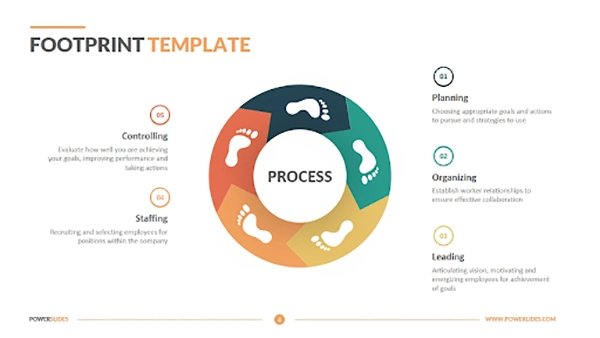
The footprint strategy and layout can further be seen in the infographic :
Environmental branding works when visual communication aligns with spatial hierarchy. Within physical limits, clarity matters more than scale. It is the structure that forms the essence.
Research from the Exhibition and Event Association of Australasia shows that attendees spend an average of 8–10 minutes in booths with engaging characteristics.
That means:
Color contrast improves retention. Studies in visual cognition show that high contrast messaging increases recognition speed.
Lighting direction also shapes perception. Front lighting flattens graphics; angled lighting adds depth.
In modular systems, repetition strengthens memory. When graphics, materials, and messaging tell the same story, visitors process information faster.
When someone steps into your booth, what happens next? Do they pause with interest or drift past within seconds? Interaction architecture defines that outcome.
It structures movement, focus, and conversation inside a fixed footprint.
In modular systems, interaction must be planned at the same time as structure. A clear entry zone within the first 6-8 feet sets direction.
A defined demo point anchors attention. A quieter corner supports serious talks. CEIR research shows that booths with live demos increase visitor engagement and improve lead quality compared to static displays.
That result isn’t accidental; it’s spatial logic.
Even the event banner design plays a direct role. Banners aligned with natural traffic flow reinforce the value proposition before the staff initiates contact.
Fun Fact Using a consistent brand can increase brand recognition by 80 %
Tourists will evaluate quality in a few seconds, usually without noticing. Gauge of panel alignment, finish texture, lighting tone, and such elements portend dependability.
With modular systems, the selection of material should be a balance between durability, aesthetic value, and brand compatibility.
The reason is that aluminum extrusion frames remain industry standard since they are light, reusable, and stable in structure when installed in more than one location.
With good maintenance, the suppliers are said to have a lifespan of 5 to 10 years. Dye-sublimation printed tension fabric graphics are capable of providing precision in color reproduction, and allow easy replacement without a frame dismantle.
Consistency is critical. A brand that is showing polished materials in one city and inferior finishes in another undermines trust.
The temperature in the lighting must be constant. Surface finishes need to be crosswise. Brand values should be directly transferred to material choices.
A technology company can depend on white laminates that are clean and have built-in LED lights. A green business can opt to use recycled aluminum and certified wood materials.
Credibility is promoted when the quality of the building matches the brand promise.
A modular branding system is only effective if it delivers measurable results. Without evaluation, improvement is impossible.
Key performance indicators should include:
CEIR data shows that most exhibitors aim to generate sales, yet many track only raw traffic. That approach misses insight.
Short digital surveys, engagement tracking on touchscreens, and structured staff feedback provide deeper analysis.
In a nutshell, considering your brand values to align with the branding agenda is an important step to meet the goals of customer interaction, having an accurate strategy, and increasing the value.
Environmental branding has come up as a great alternative to parallel running marketing strategies emphasizing environmental values with brand promotion, which appears appealing to customers, increasing engagement.
Ans: Environmental design in branding involves incorporating various elements such as logos, colour schemes, etc.
Ans: The key element is the brand name.
Ans: Luzhou Pck is an example of branding.
Ans: It helps in building customers and increasing the market share.
