
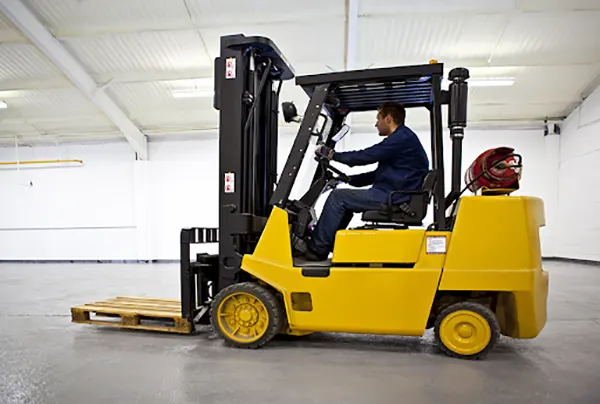
Contacting a forklift hire sounds simple: pick a truck, book dates and get it delivered, but what most people miss out on is not listing the real job requirements.
Furthermore, when an actual plan is not in place right from the start, you end up paying more than what you asked for, not estimating the time required for the project, documentation, and other factors silently inflate the budget until it’s too late.
Here’s how you can avoid these last-minute changes and miscalculations by planning your budget smartly once the project starts moving.
Key Takeaways
- Calculating the requirements by analysing the project requirements
- Building a proper cost model by including all specifications and details
- Including compliance, insurance and damage risk in the total planned budget
- Adding a contingency that correctly reflects the project’s reality
Before you compare rates, define the lift plan. Two projects might both “need a forklift,” yet one requires precision handling in tight aisles while the other needs all-terrain stability on uneven ground. Clarify these basics first:
Ask yourself (or your site lead) four questions:
Duty cycle matters, as choosing the cheapest option may look enticing at first, but when it starts to slow down your project and cause delays, then it ends up being more expensive than it should have been.
Indoor vs outdoor, surface quality, gradients, and aisle width should drive the spec. An electric counterbalance might be perfect for clean indoor work, while rough-terrain telehandlers or larger diesel units may be non-negotiable on a muddy site. Also check:
Misjudging any of these can force a mid-project swap—often the biggest budget killer.

Once the defined scope is set and the objectives are clear, plant your budget on the total cost rather than just the daily or weekly rates. A practical budget separates the visible hire charge from the operational extras that tend to arrive as surprises.
Here are the line items worth capturing in one place:
If you want a reality check on typical hire configurations and what’s usually included, it can help to view available forklift hire packages and compare your planned use against standard options.
The point isn’t to “shop a deal”; it’s to sanity-check whether your project needs a short-term, flexible setup or a longer hire where monthly pricing and service coverage become more important.
A common budgeting mistake is defaulting to “daily hire” for flexibility. Daily can be cost-effective for truly short bursts, but it becomes poor value once you creep into multi-week territory.
The trick is to match the tariff to your project risk. If the programme is prone to weather delays, late inbound materials, or other trades blocking access, building in a weekly buffer can be cheaper than repeatedly extending day-by-day.
If the forklift is left idle for long stretches (waiting on deliveries, inspection windows, or fit-out sequencing), consider customising hire periods and set a specific schedule for each phase where it is most beneficial. Paying for “just in case” availability is one of the fastest ways to inflate costs.
Labour can outweigh the truck cost, so decide this up front.
Operated hire can be cost-effective when:
Self-driving can be budget-friendly, you already have trained operators and regular usage.
Just don’t forget the indirect costs: induction time, refresher training, supervision, and the productivity impact if the operator is juggling other duties.
Fun Fact
An average forklift weighs around 9,000 pounds, which is roughly three times heavier than the weight of an average car.
Forklift hire budgets often miss “risk cost”—until an incident forces the issue.
Depending on the equipment and context, you may need proof of thorough examination (commonly associated with LOLER), maintenance records, and site-specific checklists. Build time for:
Clarify what’s covered and what isn’t. Even when insurance is in place, the excess, damage waivers, and liability for tyres or attachments can vary.
If your site is tight, congested, or unfamiliar, assume a higher risk of minor impacts and budget accordingly.
Energy is rarely the biggest number, but it can create operational headaches that translate into cost.
If you’re hiring electric, confirm:
For LPG, check cylinder availability and storage rules. For diesel, consider refuelling logistics, spill kits, and any site restrictions.
Also, confirm delivery access: low bridges, restricted hours, banksman requirements, or permits can add cost and delay if discovered late.
A flat 5% contingency is often too optimistic for fast-moving sites. A better approach is to tie contingency to known uncertainties:
If your scope is stable and measured, contingency can be modest. If the plan is “we’ll figure it out as we go,” budget accordingly—because you will pay for that flexibility.
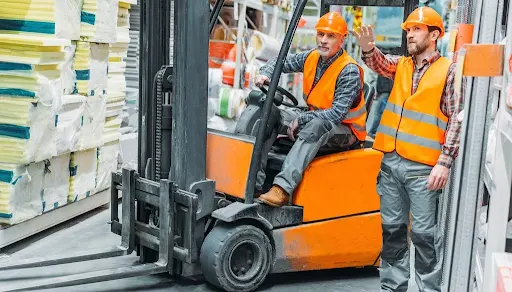
Before committing, pressure-test the plan:
Hiring a forklift doesn’t have to turn out to be a huge budget black hole. With a job-led spec, a total-cost view, and a contingency based on real risk, you’ll get predictable handling capacity—and avoid paying extra for last-minute corrections.
Ans: When planning a budget, all kinds of risks should be accounted for, like:
Ans: Operator costs, insurances, base hire rate, maintainances and more should be calculated when listing down a detailed cost model.
Ans: Daily, Weekly, and Monthly hire duration options are provided when hiring a forklift for a project.
Ans: Planning for compliance means including documentation, insurance, and excess exposure costs in your planned budget.
