
After weeks of working through and successfully leading an insightful webinar. With the best speakers in your industry and providing high-value content to a live audience, as it happens for many B2B marketers. The valuable recorded hour ends up being left in the digital archive to collect digital dust.
The irony of content marketing is that creating good content takes a lot of effort, while the need to consistently post on several channels is relentless. Marketers who post on a daily basis have proven to produce much more traffic than those who post weekly.
The solution to this problem is not to work harder or hire more staff. It is to work much smarter and faster by using AI-based content repurposing to maximize the effectiveness of your high-value assets.
KEY TAKEAWAYS
- AI cuts 60-70% of the time of manual webinar re-use.
- Using AI, companies can create 3x the number of published content pieces through their content workflows.
- From a single webinar, a company can produce 20 or more assets that represent each of the stages in the buyer’s journey.
A single 60-minute webinar has a greater amount of content assets than most marketers think they have, including expert insights, real-world examples, audience questions, and visual presentations. Each of these elements can become standalone content pieces.
According to Demand Gen Report, 73% of B2B buyers prefer webinars as their preferred content format for evaluating solutions. This makes them not just valuable for initial engagement, but prime candidates for repurposing. The average B2B webinar generates $1,000-$5,000 in marketing value when properly leveraged across channels.
The problem isn’t the raw material. It’s the manual effort required to extract, edit, and optimize each piece. In traditional video editing, it takes specialized skills and time to create a webinar. The average content team will perform 8-12 hours of manual repurposing to convert the typical one-hour webinar to approximately five to six different assets.
This estimation is completely turned on its head by AI, as it reduces the amount of time spent in this transition by approximately 60-70%, while at the same time, providing three to four times more variations of content.
Let’s take a step back from the how-to steps and discuss the broader picture of AI. AI will transform the way B2B marketers work and compete, and it’s not simply a tool that increases productivity.
The Resource Allocation Problem: Traditional B2B marketing follows an 80/20 rule in reverse. Teams spend 80% of their time on content production and only 20% on strategy and distribution.
With the ability of AI to produce massive amounts of content extremely quickly, it also allows marketers to spend more time on higher-value activities. This includes developing insights from their audience, refining messaging for their audience, and building better relationships with their audience. The automation of the content creation process takes place.
The Competitive Velocity Gap: Companies using AI-powered content workflows publish 3x more content than competitors using traditional methods, according to recent HubSpot research.
Since B2B companies create both pipelines through thought leadership and maintain a consistent presence to facilitate new leads, the ability to create large amounts of content quickly will provide an enormous advantage to the first movers within your industry.
The Attribution Revolution: AI-powered repurposing creates natural A/B testing at scale. By changing one webinar into 20 different assets, you are creating 20 opportunities to gather valuable data regarding what resonates with your audience.
This data becomes invaluable for refining your content strategy and understanding buyer preferences across the funnel.
Here’s how to systematically transform one webinar into 20+ marketing assets without burning out your team.
Start with the transcript. Within minutes, using AI transcription tools, you can create an entire searchable text version of your Webinar with 95%+ accuracy when using modern AI models. You can leverage this searchable text to create your blog post/s, social media captions, or Email content, among others.
Simply cleaning up your Transcript and making sure it adheres to your branding and voice will enable you to create your first three assets: blog post, article for LinkedIn and email newsletter.
Real-world result: SaaS company Terminus reported that blog posts derived from webinar transcripts generated 2.3x more organic traffic than their standard blog content because they contained authentic expert language and long-tail keywords that matched actual search queries.
Extract the golden moments. Every webinar has 5-10 standout moments where speakers share particularly valuable insights. You can take this a step further and create short videos out of this content. To find and identify these video segments quickly, you will need to have the best AI video editing software.
It allows you to automatically identify the most engaging clips and automatically create clips formatted for each of the social media platforms.
Modern AI video platforms use natural language processing to identify high-engagement moments by analyzing transcript sentiment, speaker energy, audience reactions, and topical shifts. This technology mimics what a skilled video editor would do manually, but in minutes instead of hours.
Create platform-specific versions. The requirements for each social media platform differ from one another. For example, on Instagram, you will need a different aspect ratio and length than on YouTube. AI video editing software will enable you to automatically crop and resize your video content for each platform while still maintaining high-quality video.
Performance data shows platform-specific optimization matters significantly. LinkedIn videos in 1:1 square format receive 30% more engagement than 16:9 videos, while YouTube Shorts perform best in 9:16 vertical format. AI tools handle these conversions automatically while preserving the focal points of your content.
Let me show you exactly what you can create from a single webinar, with proven performance benchmarks.
Video assets (8):
Each of these videos will help support your content marketing strategy. According to Wistia research, 60% of all viewers watch videos shorter than 90 seconds to completion. It is compared to just 25% of viewers who watch videos longer than five minutes. Therefore, using shorter clips will result in an increase in total viewership of your content.
Written content (6):
Pull direct quotes from your transcript to maintain authenticity. B2B buyers respond to peer language and real expert insights, not polished marketing copy. Companies that include authentic customer or expert quotes in content see 89% higher trust scores.
Visual content (4):
Visual content generates 94% more views than text-only content. Quote graphics specifically drive 3x the social shares of standard text posts in B2B marketing.
Audio content (2):
Commuters and busy multitaskers listen to audio content more than any other type of media.
As a result, audio marketing provides one of the largest potential audiences available today (464 million podcasts currently exist)
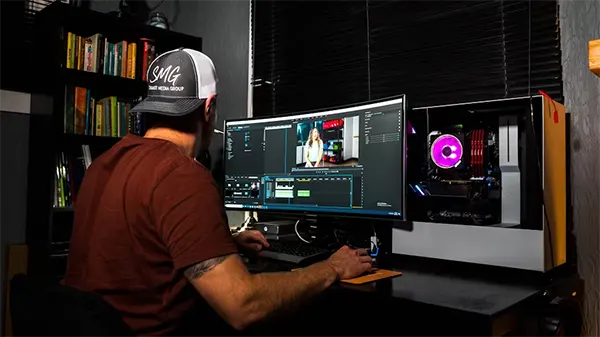
Here’s the step-by-step process that takes less than 4 hours total, compared to 20+ hours with traditional methods.
Hour 1: Setup and transcription. Upload your webinar recording to your AI video platform. Replicate audio by producing transcripts, identifying critical points within your podcasts, and using initial audio clips so that you may concentrate on other aspects of your content.
Tool recommendations: Descript, utilizing its 98.5% transcription accuracy when dealing with business audio repurposing; Opus Clip leverages AI to highlight what might be considered ‘viral’ moments during playback! Riverside.fm offers a host of proprietary features including transcription within the podcast interface as well as identifying and creating clips.
Using CapCut enables individuals on tight budgets to make use of a solid set of AI-related features, albeit with fewer enterprise-focused features than Descript, Opus Clip, or Riverside.
Hour 2: Review and select. Review the AI-generated clips and select the strongest 5-8 segments. Check transcripts for accuracy (particularly technical terms and company names), and mark sections for blog content. This curation step ensures quality.
Pro tip: Look for moments that create information gaps—clips that intrigue viewers enough to seek out the full webinar. These perform 40% better than clips that provide complete, self-contained insights.
Hour 3: Content creation. Transform transcript highlights into written content using AI writing assistants. Create quote graphics using your design templates or AI design tools like Canva’s Magic Write. Package the key insights into a downloadable PDF guide.
The human role here is crucial: While AI provides content for you in the form of rough drafts, you need to add strategic context to each piece produced, communicate your brand’s voice yet put all insights in context to your buyer’s specific pain points. This combination is five times faster than starting a draft from a blank page, while still producing content that meets quality standards.
Hour 4: Optimization and scheduling. Write platform-specific captions, add relevant hashtags based on trending topics in your industry, and schedule content across channels. Stagger releases over 2-3 weeks to maintain consistent publishing.
Lastly, use one of the available AI-based scheduling platforms (Buffer or Hootsuite) to determine when is the best time for you to post based on levels of engagement your audience generates. Companies using AI-optimized scheduling see 23% higher engagement rates than those posting at arbitrary times.
Once you’ve mastered basic repurposing, level up with these advanced techniques.
Dynamic Personalization at Scale: Create different versions of your content according to the persona you are targeting with artificial intelligence. For example, your CFO-oriented video focuses on return on investment and risk reduction; for the technical buyer, your video will focus on integrations and technical specifications.
Vidyard is an example of an application that provides businesses with a single set of materials for creating multiple versions of video . Therefore, it you can use the same materials in all variations.
Real-world case: Marketing automation platform Marketo reported 47% higher conversion rates on persona-specific content versus generic content, with only 2 hours of additional production time using AI customization tools.
AI-Powered Content Intelligence: Modern platforms are designed to help identify what topics, speakers, and segments of time result in the most engagement. Thus, they will provide you with insights to help inform your future content strategies. Also, if pricing pages generate three times the downloads than feature overview pages, you might consider using a pricing page first in your next marketing campaign.
Automated Follow-Up Sequences: Connect your content multiplication system to your marketing automation platform. When someone watches a 60-second clip about a specific feature, automatically send them the full webinar section, related blog post, and case study. This creates personalized nurture tracks without manual intervention.
Companies using AI-driven content recommendation engines see 28% higher lead-to-opportunity conversion rates because prospects receive perfectly timed, contextually relevant content.
Not all AI video editing platforms are created equal. Here’s how leading options compare:
Descript ($24-$40/month): Best for teams prioritizing transcript accuracy and collaborative editing. Most recognizable product features include the use of overdub technology, studio sound improvements, and screen recording capabilities. All of these technologies are beneficial for organisations that create educational materials or webinars where their final product resembles that of a podcast.
Opus Clip ($9.50-$29.90/month): Optimized specifically for creating viral short-form content. Uses AI to identify the most shareable moments and automatically adds captions, zoom effects, and emoji reactions. Best for teams focused heavily on social media distribution.
Riverside.fm ($19-$79/month): For a premium, high-quality option to record webinars and repurpose as necessary, with all recordings made locally at each participant’s location in 4K.
In addition, each video recording will be edited, clipped, and transcribed using artificial intelligence technology, which is a necessity for creating extremely high production quality webinars and video podcasts.
CapCut (Free-$19.99/month): Surprisingly capable free option from ByteDance (TikTok’s parent company). Lastly, this service includes automated captions generated by AI, trending template selections, and clip detection capabilities.
Therefore, this service is primarily geared towards smaller companies that are just beginning to transition from traditional media to AI-generated media.
Vidyard (Custom pricing): Enterprise solution integrating video hosting, analytics, personalization, and AI editing. Best for large B2B sales and marketing teams needing advanced features like video email tracking and CRM integration.
For written content repurposing, Claude or ChatGPT excel at transforming transcripts into blog posts, while Jasper (starting at $49/month) offers marketing-specific templates and brand voice training.
The real power isn’t just creating more content—it’s strategic distribution that compounds your results.
Follow the content cascade model. Start with your full webinar on your website and YouTube. One week later, release highlight clips on social media with links back to the full recording. Then publish your blog post with embedded clips. Finally, use quote graphics and written content to drive traffic back to the full recording.
This cascade approach generated 312% more total views for webinar content compared to one-time publishing, according to Content Marketing Institute research. Each asset serves as a discovery point that funnels interested prospects toward your highest-value content.
Customize for each audience segment. Your CFO-focused clip needs different messaging than your technical buyer content. AI tools let you create multiple versions targeting different personas without starting from scratch.
B2B buying committees now average 6-10 stakeholders. While keeping your core messaging consistent, you can make sure you’re addressing the particular concerns of each decision-maker by developing persona-specific content versions.
Test and iterate. Track which clips generate the most engagement. Double down on topics that resonate. Use performance data to inform your next webinar’s content strategy.
Make a dashboard for tracking the performance of your content that shows completion rates, click-through rates to the entire webinar, lead form submissions, and pipeline influences. The average yearly increase in content ROI for businesses that regularly evaluate and refine their content performance is 43%.
Implement algorithmic optimization. Social media algorithms reward consistent posting and high engagement. Distributing your 20 assets over two to three weeks lets platform algorithms know that you’re a valuable and active content creator. This increases the organic reach of all your content, including future posts.
LinkedIn’s algorithm, for example, prioritizes accounts that post 3–5 times per week with strong initial engagement. A content multiplication strategy naturally achieves this cadence without requiring constant new content creation.
To bring efficiency to the webinar, some common mistakes need to be avoided:

Track metrics that reveal true content multiplication impact:
Content Multiplication Factor: Divide total reach across all repurposed assets by the original webinar views. A healthy multiplication factor is 8-12x – meaning your repurposed content reaches 8-12 times more people than the original event.
Example: In a webinar of 500 live attendees, if 20 repurposed assets collectively reach 5,000 people, the multiplication factor will be 10x. Track this metric over time to optimize your repurposing process.
Time-to-Value Ratio: Calculate the total engagement time across all assets divided by production hours. If your 4-hour repurposing effort generates 800 hours of total view time, your ratio is 200:1.
Leading B2B marketing teams achieve ratios of 150:1 or higher with mature AI content workflows.
Pipeline Influence: Track the opportunities that include engagement with repurposed content in their buyer journey. Use multi-touch attribution to understand the role of different content formats in conversion paths.
Companies with complex attribution report that short-form video clips excel at top-of-funnel awareness, while long-form webinars and detailed blog posts drive mid-funnel consideration and bottom-funnel decision-making.
Cost Per Engagement: Divide total content production costs by total engagements (views, shares, clicks, conversions). AI-powered repurposing usually reduces cost per engagement by 60-75% compared to creating net-new content for each channel.
Organic vs. Paid Performance: Compare how repurposed organic content works against paid campaigns. Many teams find their repurposed webinar clips generate comparable or better results than paid ads at a fraction of the cost.
Understanding where AI content technology is heading helps you future-proof your strategy:
Real-Time Content Generation: Evolving AI tools can generate highlight clips and social posts in between the webinar. Within 12-18 months, we’ll see live content multiplication where your social channels automatically post key moments as they happen.
Hyper-Personalization: Next-generation AI will create individualized content versions for each prospect based on their firmographic data, engagement history, and behavioral signals. Imagine a webinar that automatically generates 50 different versions, each focusing on the most relevant insights to different ICPs.
Multimodal AI: Future tools will seamlessly move between video, text, audio, and interactive content formats. You’ll describe your content goals in natural language, while AI will generate the optimal mix of assets for specific needs.
Predictive Content Strategy: AI will analyze your existing content performance, competitive landscape, and market trends to recommend topics for your next webinar, to maximize impact. Some tools already do rudimentary versions of this, but complexity is improving rapidly.
Content multiplication isn’t about creating more noise – but about maximizing the value of the expertise and effort you’ve already invested in creating quality webinars.
With AI-powered tools, you can maintain a consistent content presence across channels without increasing budget. The key is systematic repurposing that preserves quality while dramatically reducing production time.
Companies that implement AI content multiplication strategies report 3-5x increases in content output, 60-70% reductions in production time, 2-3x improvements in organic reach, and 40-50% increases in content-influenced pipeline. These aren’t marginal gains. They’re transformational improvements that create sustainable competitive advantages.
Your next webinar isn’t just an event. It’s three weeks of content waiting to be unlocked. Start treating every piece of long-form content as a strategic asset that can fuel your entire content marketing engine.
The best time to implement this approach was six months ago. The second best time is right now, with your next scheduled webinar. The competitive landscape in B2B marketing is shifting rapidly toward teams that master AI-powered content multiplication. The question isn’t whether you should adopt these practices, but whether you can afford not to.
Ans: More than 20 assets can be made out of a single webinar.
Ans: It allows moving between videos, text, audio and other formats.
Ans: That the SEO needs not be forgotten, as it plays a huge role in making it discoverable.
Ans: Major of frameworks start with a transcript.