
The modern travel management software has become more advanced with AI and machine learning integrations. One can make a real-time chat with the assistant and make their bookings. This involves submission of documents, payment confirmation and ticket sharing for the trip.
But with the wide list of tools available for various purposes and serving different features, it might be quite complex to choose the one that meets your specific needs. As different platforms have different features, such as faster booking, live support and AI-assisted rebooking.
This post shares the 7 travel management platforms worth knowing in 2026. Keep reading to choose the right one for you!
Key Takeaways
- AI features, including the assistants in travel software, have become truly useful in 2026.
- Modern platforms serve travel needs, expense management and card handling—all in a single place.
- The best quality of the platform depends strongly on company size, travel density and structure needs.
Before we get into the list, here’s a simple audit. The platforms that earn a spot on your shortlist should contain at least four of these six.
| What to check | Why it matters in 2026 |
|---|---|
| AI that ships in production | Real booking, rebooking, and expense coding, not roadmap promises |
| Pricing model | Per-trip flat or commission-funded; per-seat-per-month feels dated |
| Integration depth | Native NetSuite, Workday, Okta connectors instead of CSV exports |
| Support model | A live human picks up in under a minute, 24/7, not a chatbot |
| Mobile experience | Modify and cancel from a phone, not just read-only on mobile |
| Implementation timeline | Weeks, not months. Drives the ROI start date |
Before taking a deep dive into the 7 best software. Take a glance at each while checking their features from the surface:
| # | Platform | Best for | What they released in 2026 | Pricing |
|---|---|---|---|---|
| 1 | Itilite | Mid-market unified travel, expense, cards | AI voice feature, Iris AI, Mastermind | $10/trip; $6/user/mo expense (annual) |
| 2 | Perk (formerly TravelPerk) | Travel-heavy mid-market with EU exposure | Trip Assistant in Slack and Teams; updated FlexiPerk | Starter free + 5%; Premium $99/mo + 3% |
| 3 | Brex Travel | Venture-backed and growth-stage | Finance OS consolidation, AI compliance audits | Card free; Premium software $12/user/mo |
| 4 | Amex GBT Egencia | Global enterprise travel programs | Egencia AI in Microsoft Teams, Concur Expense blending | Custom |
| 5 | Ramp Travel | US mid-market on a card-first stack | Ramp Procurement matured, AI auto-categorization | Free; Plus $15/user/mo |
| 6 | Navan | AI-driven mid-market unified T&E | Navan Edge with Ava as an opposing agent | Free up to 200 employees; custom enterprise typically $10–$25/user/mo |
| 7 | SAP Concur | SAP-anchored large enterprise | Joule generative AI, Microsoft Teams app | Custom |
Itilite gets the top rank here for a simple reason. It’s one of the only platforms that mixes travel, expense, and corporate cards into one product from the base. You don’t need to connect isolated tools through collaborations to make them work together.
The booking system and the travel agents are part of the same platform, not a different supplier. The same login also deals with expenses and cards. And in 2026, Itilite added an AI voice feature, so you can book a trip or rebook a flight just by talking to it.
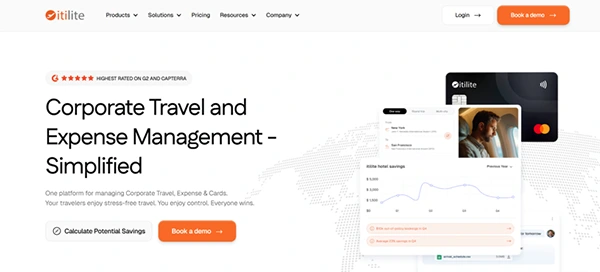
Latest launch: Iris is Itilite’s AI travel examiner. It began operation in October 2025 and answers queries about spend, policy, and savings in plain English. Mastermind is their evaluation tool, comparing your travel program against companies of similar size. The AI voice feature added this year takes care of bookings, changes, and urgent rebooks without you looking through menus.
What stands out:
Best for: CFOs and travel supervisors at 100 to 2,000 employee US and Canada companies who want one supplier for travel, expense, and cards.
Pricing: $10 per trip for travel. $6 per user per month for expense, billed annually. No setup fee.
TravelPerk changes its name to Perk in November 2025. The big strength here is Europe. Their data is hosted in AWS Ireland, they support VAT-ready invoicing for European receipts, and every plan (not just the free one) comes with 24/7 customer support.
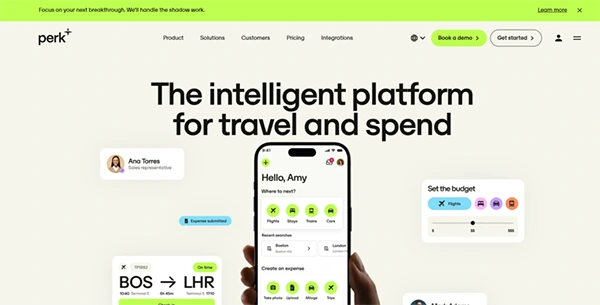
What they released in 2026: Along with the new name, Perk revised their booking flow and updated the AI assistant. The Trip Assistant now runs inside Slack and Microsoft Teams, so you can get trip alerts and answers in the chat tool your team presently operates with. FlexiPerk is still the main standout. It lets you cancel any flight, hotel, car, or train and get 80% of the fee back. The trade-off is a 10% premium on the trip.
What stands out:
Where it falls short: The per-booking fees pile up fairly fast if your team books many trips. And Perk is travel-only, so you’ll need a new tool for cash and cards.
Best for: Travel-heavy mid-size companies with ongoing European travel.
Pricing: Starter is free with a 5% booking fee ($2 min, $30 max). Premium is $99 a month plus 3%. Pro is $299 a month plus 3%.
Brex started as a corporate card for venture-backed startups and has evolved into a broader finance platform. In 2026, they pulled cards, banking, travel, and bill pay into a single product.
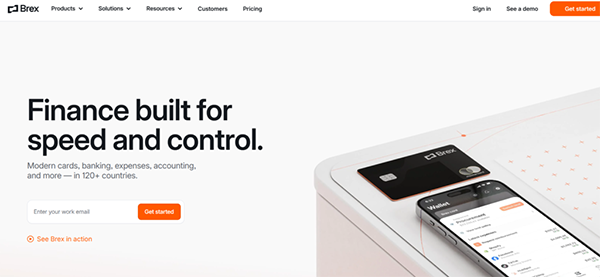
What they released in 2026: Brex now runs Card, business banking, Brex Travel, and bill pay as one finance platform. AI compliance tests look at policy issues as expenses come in, instead of waiting until month-end. The Vault offers up to $6 million in FDIC coverage for fund balances.
What stands out:
Where it falls short: Travel inventory and traveler surveillance are simpler than custom travel platforms. Brex Travel only works with the Brex Card, so if you ever alter your cards, you’ll have to change your travel too.
Best for: Venture-backed and growth-stage CFOs (50 to 1,000 employees) who routinely use Brex.
Pricing: Brex Card is free. Software divisions are Essentials (free) and Premium ($12 per user per month). Enterprise pricing is on request.
Egencia is the promotional travel arm of American Express Global Business Travel. The Q1 2026 relaunch is the biggest move from a legacy travel management company in years.
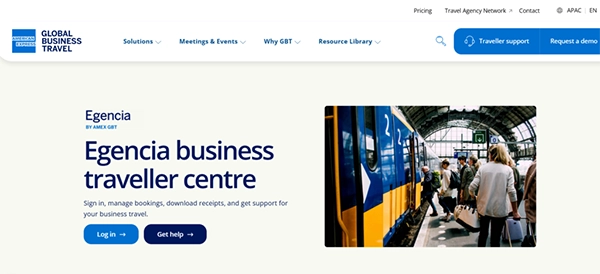
What they released in 2026: The next-gen Egencia came with agentic AI search and a new product called Egencia AI, a speech-based travel assistant that operates inside Microsoft Teams.
They also added a direct pairing with Concur Expense (the first non-SAP product to do this). The average booking time is now under 3 minutes. After you book, the provider will continue watching prices and will rebook you at a reduced rate if the price drops.
What stands out:
Where it falls short: Onboarding takes far more time than modern self-help platforms. Pricing is custom, which means you’ll need to talk.
Best for: Global enterprises with international travel programs and duty-of-care needs.
Pricing: Custom. Contact sales.
Ramp is an all-in-one spend platform with cards, travel, expense, and AP on one account. In 2026, they closed the loop from reception to AP and moved Ramp Travel out of beta.
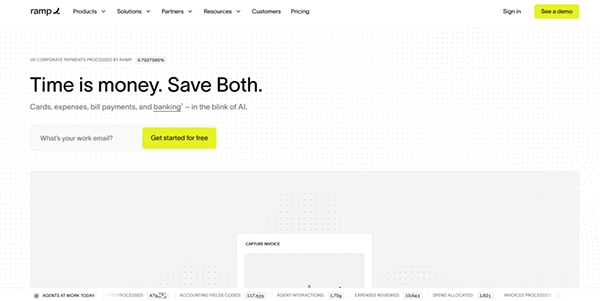
What they released in 2026: Ramp Procurement was founded in 2025 and grew up through 2026. AI auto-categorization now matches receipts to card motions without manual review. Ramp Travel left beta with help from Priceline. New features include automatic price-drop rebooking for refundable hotels, in-platform flight changes, and hotel referral support.
What stands out:
Where it falls short: There’s a 3% foreign currency swap fee. International coverage and traveler tracking are simpler than Concur or Egencia for large global programs.
Best for: US mid-market CFOs replacing legacy charges and AP on a card-first stack.
Pricing: Free with a Ramp account. Ramp Plus is $15 per user per month.
Navan is one of the most respected names in mid-market travel and expense. The 2026 move was Navan Edge, which molded the AI assistant Ava into something closer to an independent agent.
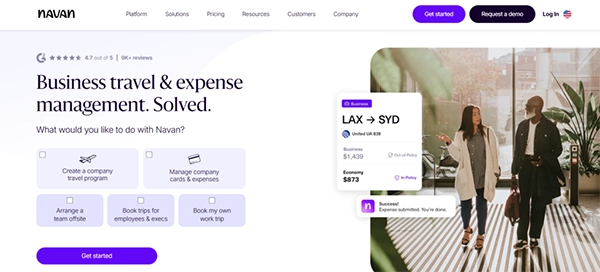
What they released in 2026: Navan Edge went live in March 2026. Ava used to be a chatbot. Now it acts more like a delay manager. It rebooks flights when delays hit, calls hotels to warn them about late arrivals, and adjusts dinner reservations on behalf of the traveler. The hotel catalog was also rebuilt with AI and now shows 70% more rate options across 2.6 million rentals.
What stands out:
Where it falls short: The free plan stops at 200 employees. Above that, Navan moves to custom enterprise pricing, usually $10 to $25 per user per month plus platform and per-booking fees. Support is chat-first, and phone access relies on which plan you’re on.
Best for: Mid-market companies (50 to 200 employees) merging travel and expense onto a modern stack.
Pricing: Free Business plan for up to 200 employees. Navan Expense is free for the first 5 active users, then $15 per user per month. Custom pricing for 300+ employees.
Concur is the legacy enterprise chosen for travel and expense. The product is sliced into separate modules: Concur Expense, Concur Travel, Concur Invoice, Concur Request, and Concur TripLink. In 2026, they added Joule (SAP’s generative AI assistant) and built a Microsoft Teams app.
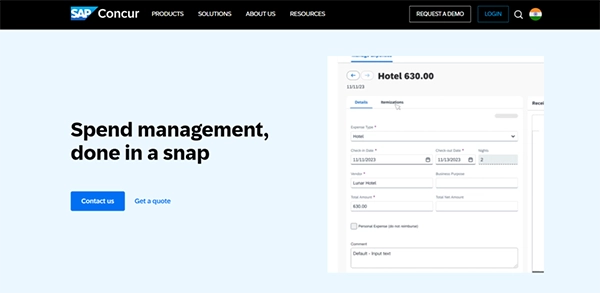
What they released in 2026: Joule is now shared across Concur. You can book multi-leg trips through a chat-style interface. The AI Policy Navigator reads your company’s travel policy and shows direct tips during booking. There’s also a Microsoft Teams app where you can review and approve Concur expense entries without leaving Teams.
What stands out:
Where it falls short: Implementation usually runs 3 to 6 months and often needs a consulting partner. The mobile experience hasn’t kept up with newer self-serve platforms.
Best for: Large enterprises (1,000+ employees) with significant SAP ERP investment.
Pricing: Custom. Contact sales.
The right answer depends on what you’re trying to solve. Learn the ways to pick by use case:
One should check for the required things. Below are the 5 questions that one should ask any TMS:
The above-mentioned 7 platforms are not lined up in the ranking. Each one is chosen after heavy consideration of various available features. Each one is built with its own different specifications and user demands. One is best for quick bookings, while the other is best to complete bookings with the help of AI. What matters is to decide which one suits your needs.
In the end, the best travel management system is not the one with the longest feature list, but the one that removes every barrier and smooths the booking experience every time.
