
The boundaries of personal identity are being rewritten by generative AI. What was once considered to be a futuristic concern has become an everyday legal issue: Deepfakes, synthetic voices, and hyper-realistic avatars now blur the line between an actual human being and a digital clone.
In this so-called Post-Privacy Era, your face, voice and even distinct mannerisms have become an asset that can be scraped and used without your express consent. While the advent of high-speed fiber optic technology has enabled the use of much more sophisticated forms of real-time identity verification, it has also increased the speed at which people’s likenesses can be turned into digital assets.
This article will explore the high-stakes battle to determine who owns your digital self, as well as provide you with steps to take in order to prevent your personal identity from being created as an artificially-generated product.
KEY TAKEAWAYS
- New 2025 laws, like California’s AB 2602, treat your likeness as a protected personal property right.
- Unauthorized “digital replicas” in professional contracts are increasingly being ruled unenforceable by state and federal courts.
- Estates now have stronger legal standing to prevent the AI-resurrection of deceased individuals for commercial gain.
Advances in generative AI have changed what it means to exist online, blurring the line between a real person and a digital replica. Deepfake, synthetic voices, and artificial intelligence-generated avatars are so realistic that people and online verification systems cannot tell them apart from reality.
Effects that once required a Hollywood studio are now possible with a laptop and the right software. Currently, online verification systems use more than just facial or fingerprint recognition as a means of identifying an individual.
Body language, facial expressions, voice characteristics and other personal nuances can now be reproduced using deepfake technology. Concerns around AI legal issues are no longer theoretical.
These technologies have the potential to impact everyone from influencers to employees and even everyday internet users. While upgrading to fiber internet improves speed and reliability for real-time verification tools, it’s often our online presence itself that puts us at risk of AI capturing and misusing our faces, mannerisms, and even our personalities.
As a result, identity verification online is under growing strain. Current platforms are having difficulty differentiating between real people and artificially created substitutes.
Governments are racing to update laws written for a pre-AI internet, leaving consumers wondering how much control they actually have over their own likeness.
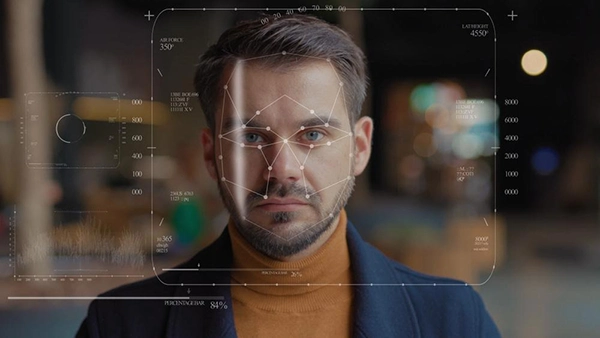
AI models capable of replicating faces and voices evolve at an unbelievable, unnerving pace. Modern facial-scan models can recreate a person’s face from a few photos, including low-resolution images scraped from social media.
Producing a fake speech pattern that closely resembles a real human’s requires about 30 seconds’ worth of audio samples. Artificially-generated speech utilizes current socialization patterns, therefore replicating how people speak today.
Large-scale data scraping has further simplified identity replication. Companies developing these tools utilize a wide variety of publically accessible archives (pictures, videos, live streams and podcasts) to develop their datasets. Once a model learns how a person looks and sounds, it can generate new content with ease.
That content can then be embedded into videos, phone calls, or interactive avatars with minimal effort. Previously, creating artificial intelligence models required technical expertise; today’s subscription models allow for anyone with an internet connection to create sophisticated AI models that could potentially be misused.
One of the major AI legal issues is the delay between technology deployment and regulation. A majority of the companies, themselves, have publicly acknowledged this fact—the primary problem being the lack of agreement between regulatory bodies about the continued availability of these types of technologies.
In the United States, digital likeness rights are mostly handled at the state level, often through right-of-publicity laws designed to protect celebrities. Most existing regulations were created prior to the advent and development of artificial-intelligence-generated replicas that have the unique ability to independently imitate and act the same as a human being.
Some states are proposing updates that explicitly cover synthetic media, but enforcement remains inconsistent.
Some actors and voice performers have recently brought lawsuits against companies that utilized artificial intelligence to copy their likenesses and/or voice patterns without their permits. It includes LeBron James, who in 2025 sent a cease-and-desist letter to FlickUp for AI-generated images of James produced by the company’s Interlink AI image generation tool.
AI-generated depictions of dead celebrities created by OpenAI’s Sora 2 have raised the question of whether a deceased person’s likeness is protected, and if so, who owns the rights to that likeness?
Internationally, AI legal issues are equally complex. The European Union has taken a strong position on the treatment of biometric data as highly sensitive information, while many countries in other regions have limited to no guidelines regarding the management of biometric data.
Many disputes hinge on whether a digital replica counts as personal data, intellectual property, or something else entirely. In India, singer Arijit Singh won a landmark ruling against Codible Ventures, which he accused of using his voice and likeness in its advertising without his permission.
And in Denmark, the government changed copyright laws to grant everyone the right to their own body, facial features, and voice.*
*This article is for informational purposes only and does not constitute legal advice. The information covered in this article is accurate as of January 2025, but laws governing AI, biometric data, and personal likeness vary by jurisdiction and continue to evolve in real time.
Identity verification systems were not built with AI in mind. Many platforms still rely on basic biometric checks, such as facial recognition or short video prompts, that AI can spoof. If a synthetic face can blink, smile, and respond in real time, it can fool traditional safeguards.
Identity verification on the Internet is often done using different criteria between platforms, and what may be considered “verified” on one platform is not necessarily “verified” on another. This inconsistency leads to numerous vulnerabilities that can be exploited by the criminal element, particularly when transitioning between systems.
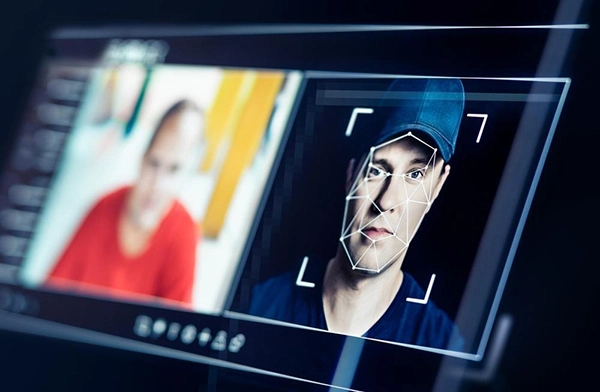
Reliable, high-speed internet plays an overlooked role here. Real-time verification tools, such as live video authentication or streaming-based checks, require stable connections to function accurately.
Technical issues such as latency, packet loss, and low bandwidth can negatively affect security and enable false content to sneak through unnoticed.
Using a reliable internet provider allows you to take advantage of AI-resistant online verification systems, especially as platforms shift toward continuous or behavior-based authentication rather than one-time checks.
Personal likeness has become a tradable asset. Influencers often “license” their facial images to use in virtual appearances, while many creators will sell artificially generated versions (via AI) of themselves for marketing and entertainment purposes. Meanwhile, ordinary people increasingly find their image or voice used without permission.
AI identity disputes are increasingly common. A person’s face might appear in an ad they never approved, or, in the case of Taylor Swift, be used to create fake explicit images. A synthetic voice based on a real person might be used to promote a product or spread misinformation.
Most of the time, people do not discover the unauthorized use of their likeness until it has already been widely shared by others. Any time someone’s likeness is illegally used, they may be exposed to economic benefits – i.e., “stealing” that person’s digital likeness.
A digital replica is cheaper than hiring talent, and enforcement risks remain low, so the perpetrator often suffers no consequences. While celebrities and influencers are popular targets, everyone with an online presence is at risk of being digitally cloned.
While it is impossible to fully protect your digital persona, you can take steps to mitigate your exposure. Keeping track of the websites where you appear online will help you protect your image. Conducting regular reverse image searches and utilizing voice monitoring technology are two excellent ways to quickly identify when your image is being misused.
If you use social media, tighten your security settings, limit who can download or reuse your content, and be mindful of what you post publicly. Even casual videos can become training material for AI models.
Using stronger identity verification tools also helps. Use platforms that support multi-factor authentication and advanced verification methods rather than relying solely on facial scans.
Secure your network. A stable, protected connection reduces the risk of interception or manipulation during identity checks. Improve your Wi-Fi signal, update routers, and use encrypted connections to protect against unauthorized network access.
The legal implications associated with AI technology today, including potential infringement upon someone’s likeness, will continue to impact society well into the future. Such can be the likeness of a person has clearly become one of the most sought after sources of information.
As AI systems grow more capable, faces and voices will be regulated more tightly, not less. Laws will evolve, but they will likely lag behind technology for years to come. Staying current with AI identity concerns is essential.
By learning more about how to create a digital likeness, to educate yourself on what cannot be legally protected, and to learn the capability of emerging AI technologies to ultimately create a replica of your likeness, you will be able to better ape your likeness from being misused.
Privacy may look different in the future, but ownership of your personal identity does not have to disappear. With informed selections and an awareness of evolving safeguards, individuals can still claim control over who they are, both online and off.
Ans: A 2025 law requiring platforms to remove non-consensual deepfakes within 48 hours of reporting.
Ans: No; new laws like California’s AB 2602 protect your likeness as a personal property right.
Ans: Yes; many jurisdictions now provide a civil cause of action for unauthorized digital replicas.
Ans: Recent rulings have affirmed that your voice is a protected personalityright.
