
Integrating Business Process Management (BPM) and Enterprise Resource Planning (ERP) is key for driving the digital transformation of today’s manufacturing & machining operations.
The effective integration of BPM & ERP helps manufacturers to deliver higher levels of Efficiency, accuracy, and responsiveness. A manufacturer’s ERP Application provides a manufacturer with a standard set of Business Processes that are common across the entire manufacturing enterprise.
BPM offers a way for a manufacturer to enhance and/or personalize individual workflows. These are unique to their own manufacturing operations, thus are vital to the success of custom and low-volume rapid manufacturing.
Since each machining project can require a different process adjustment than what would normally be defined by an ERP Application alone. BPM provides the tools for adjusting and customizing existing processes.
Let’s understand the power of BPM-ERP integration in modern manufacturing!
KEY TAKEAWAYS
- ERP systems offer significant adaptability for distinct production processes.
- The integration between ERP and BPM creates a direct link between the production floor and the data centre
- Manufacturers can respond quickly to changes in material design or issues with materials.
- The successful application of BPM often precedes implementation of ERP to effectively align processes, maximise efficiency and minimise variability.
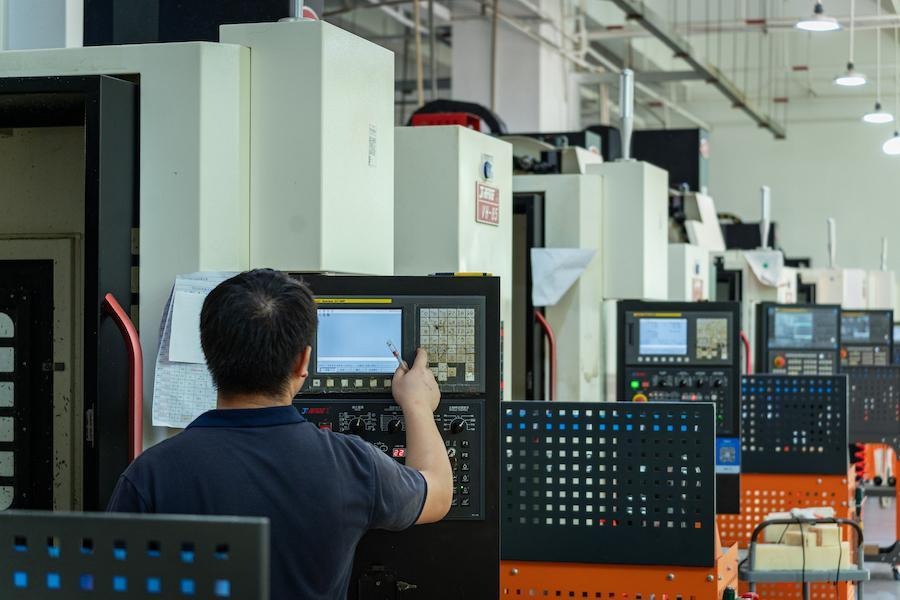
A system of software called enterprise resource planning (ERP) assists owners of manufacturing companies in choosing how to utilize the assets they have most effectively.
Business process re-engineering (BPR) entails assessing an organization’s functionality and discovering new ways to conduct business more efficiently. ERP systems provide a comprehensive perspective of the company from just one knowledge base and IT architecture.
ERP systems, on the other hand, are comprehensive, multi-dimensional, and complex systems designed with significant effort toward both design and implementation but offer no certainty that implementation will be effective.
A business process is a collection of related actions with defined sources that produce output with added value from a certain viewpoint. Business process management (BPM) is a structured approach to understanding, analyzing, managing, and continuously improving the processes used to manage an organization’s daily activities.
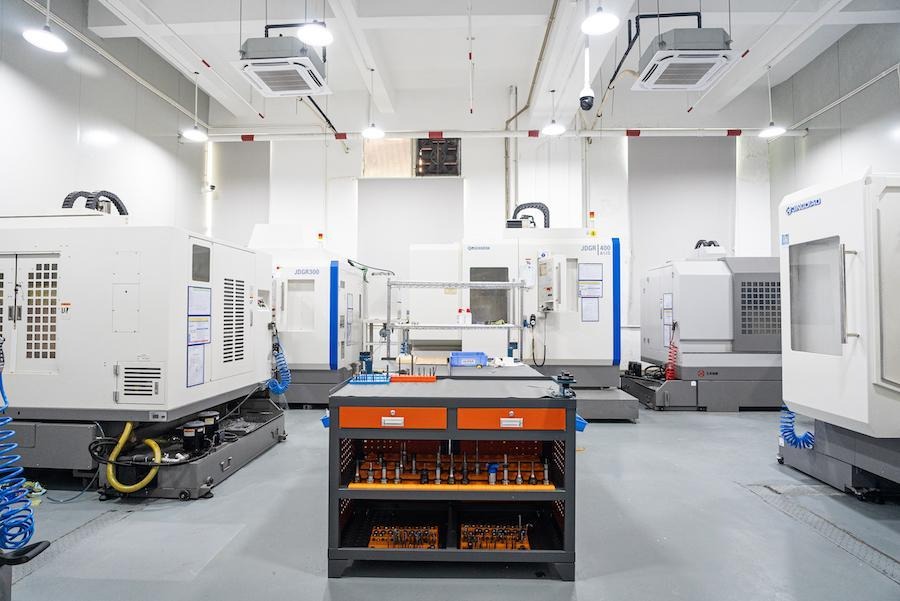
Manufacturers frequently deploy BPM prior or concurrently with ERP implementation to increase the achievement percentage of ERP in the completion of CNC machining services.
When a BPM system integrates with an ERP system, it provides a layer of oversight and control over the entire organization’s processes. Equipment, various business areas, apps, as well as databases can all be connected via a BPM.
An essential rule that must be observed in the adoption of ERP is “rationalization follows information.” Through the use of ERP systems, organizations may be able to significantly enhance their processes for planning by enabling them to properly store and utilize data.
Supervisors can view an organization of prior work data in ERP reports, along with an overview of department-specific schedules. The majority of the time, BPM implementation in businesses is built into or follows an ERP project that is already underway.
As a result, many organizations or practitioners of business process management (BPM) will perform BPM to increase the success rate of their ERP initiatives either before or after implementing the ERP solution. Researchers have proposed a BPM-ERP integrated architecture for production firms toward the backdrop of the adoption of ERP, along with the Process Optimization Model based on the integrated framework.
To develop a company’s process design and ERP project design, both design objectives must be in alignment with business process. It can be designs and possible requirements based upon program research and demand assessments to maximize the use of the knowledge created through the implementation of ERP.
It is important to pay attention to the revised process to see if it is compatible with the conventional ERP software system.
This will help you choose the best ERP system, implement platform individualization, and utilize the functionality of the entire system. Additionally, organizations must ensure they have the necessary training in place to provide business process training for improved business processes.
Simulation, examinations, efficiency, assessment, as well as constant improvement, are used to enhance business processes. These techniques also cause ERP system functions to transform into procedures.
As an illustration, business procedures for production management in a manufacturing facility were used. This example reveals that process optimization is clearly effective in establishing a data collaboration infrastructure for a corporation with the simultaneous growth of BPM and ERP.
The theoretical foundation and practical approach are then presented for businesses to effectively implement ERP.
The vast majority of large multinational corporations have adopted BPM-ERP, and more small and medium-sized businesses are beginning to embrace ERP. In spite of the fact that ERP systems have been marketed to offer significant benefits and require substantial capital investments on the part of the company, not all ERP solutions yield successful results.

The adoption of ERP frequently runs beyond the initial budget and behind time. BPM-ERP installations have occasionally fallen short of the goals and objectives set by the company. The challenges associated with ERP implementation stem from the fact that BPM-ERP implementation has forced companies to adopt the “best practices” of the most successful companies and develop appropriate comparative models.
Contrary to alternative information technologies, the introduction of BPM-ERP is plagued by managerial alongside human-related problems more than technological ones. Such impediments include resistance to change, organizational culture, misalignment with other business processes, inadequate project leadership, etc.
Upper management from throughout the firm who are able to solve disputes must be involved because ERP installation invariably results in organizational changes. The failure rate for the adoption of BPM-ERP is very high absent the support of the upper management.
In other words, there may be a reluctance to use the BPM-ERP system if business processes inside a business are modified.
As all business functions across the organization interrelate and integrate within BPM-ERP systems, the commitment of management personnel is absolutely necessary. In particular, be willing to provide workers employing business functions that are affected by ERP with straightforward interaction pathways.
The integration of BPM and ERP represents a powerful step forward for customized and precision manufacturing. When effectively implemented, it enables manufacturers to synchronize business processes with production workflows, achieving greater agility, transparency, and operational efficiency.
To ensure success, implementation teams must establish a clear roadmap—from defining project objectives and timelines to setting resource allocation and performance metrics. In customized manufacturing environments, where projects are often complex and long-term, strong project management and continuous alignment between BPM and ERP systems are essential. Without proper coordination and oversight, even the most advanced integration may fall short of delivering its full potential.
Ans: By utilizing the ERP’s centralized information repository, a manufacturer can customize and define workflow processes specific to their production methodology with the BPM.
Ans: Upper management’s commitment to supporting BPM integration is essential since BPM integration results in changes to the structure.
Ans: Many organizations implement their BPM software before or in conjunction with launching their ERP system.
Ans: The primary obstacles faced by manufacturers when implementing BPM-ERP are primarily related to management and staff resistance to new work processes.
